What are double-filtration plasmapheresis and cascade filtration?
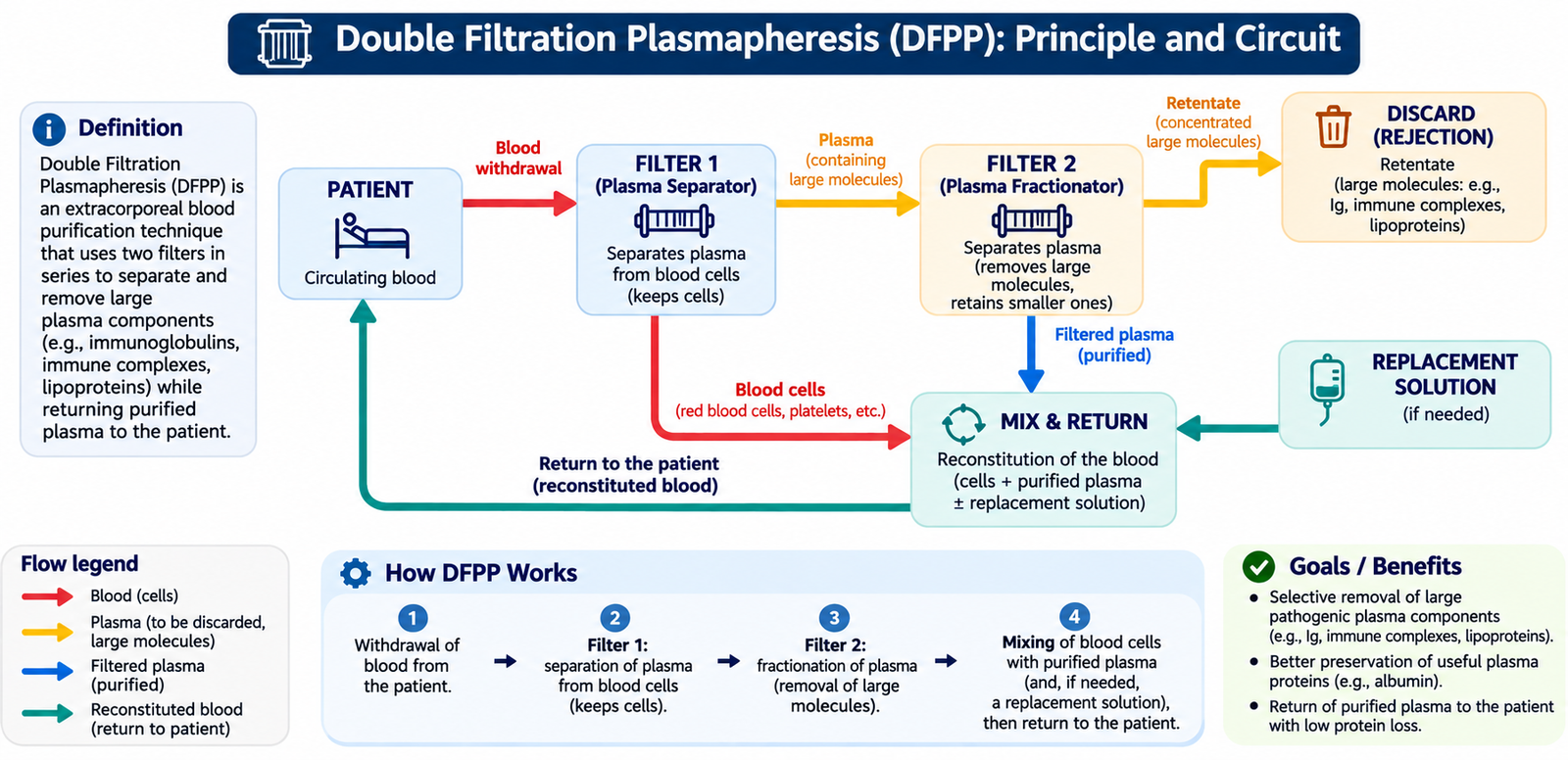
Double-filtration plasmapheresis (DFPP) is a semi-selective therapeutic plasma purification technique. First, plasma is separated from blood cells. Next, that plasma passes through a second membrane—the plasma fractionator—which retains a proportion of larger molecules while allowing other constituents to return with the patient’s blood cells. This may reduce the amount of replacement fluid compared with conventional therapeutic plasma exchange (TPE), but it does not eliminate losses of useful plasma proteins. [1][5][7]
Terminology: is cascade filtration different from DFPP?
No—usually not. In the clinical literature, the labels double-filtration plasmapheresis (DFPP), cascade filtration and cascade plasma filtration commonly describe the same two-membrane concept: primary plasma separation followed by secondary plasma fractionation. “Cascade” emphasizes the staged sequence; “DFPP” emphasizes that there are two filtration stages. [1][8][11]
DFPP
Describes the procedure using two successive membranes with differing filtration properties. The ASFA 2026 terminology section identifies the first stage as membrane plasma separation and the second as plasma filtration. [1]
Historical development: from plasma exchange to DFPP
DFPP was developed in Japan to improve the selective removal of pathogenic macromolecules and reduce dependence on donor plasma or albumin replacement. Its early investigators included Tetsuzo Agishi and colleagues. The first clinical paper appeared in 1980 and described seven patients treated for a variety of diseases, with albumin supplementation still required. [2][3][6]
1979 · Early abstracts
Early reports described selective removal or recovery of plasma fractions with two membranes. [3][6]
1980 · First clinical DFPP publication
Agishi et al. published a pioneering clinical series. The circuit used a primary hollow-fiber plasma separator and a secondary plasma fractionator. Albumin replacement was not eliminated. [2][3]
1984 · French experience in cascade filtration
A published French clinical and laboratory study described 19 double-filtration sessions in eight patients, using a plasma separator followed by alternative secondary fractionators. [4]
1980s–2000s · More fractionators and applications
Fractionators were developed with differing separation characteristics. Applications expanded across selected antibody-mediated, lipoprotein and rheological disorders, with variable evidence. [5][6][15]
2026 · Updated procedure terminology
The September 2026 ASFA Tenth Special Issue formally defines DFPP as sequential membrane separation and plasma filtration; individual clinical indications still require disease-specific assessment. [1]
How DFPP works: the two filtration stages
Stage 1 — Plasma separation
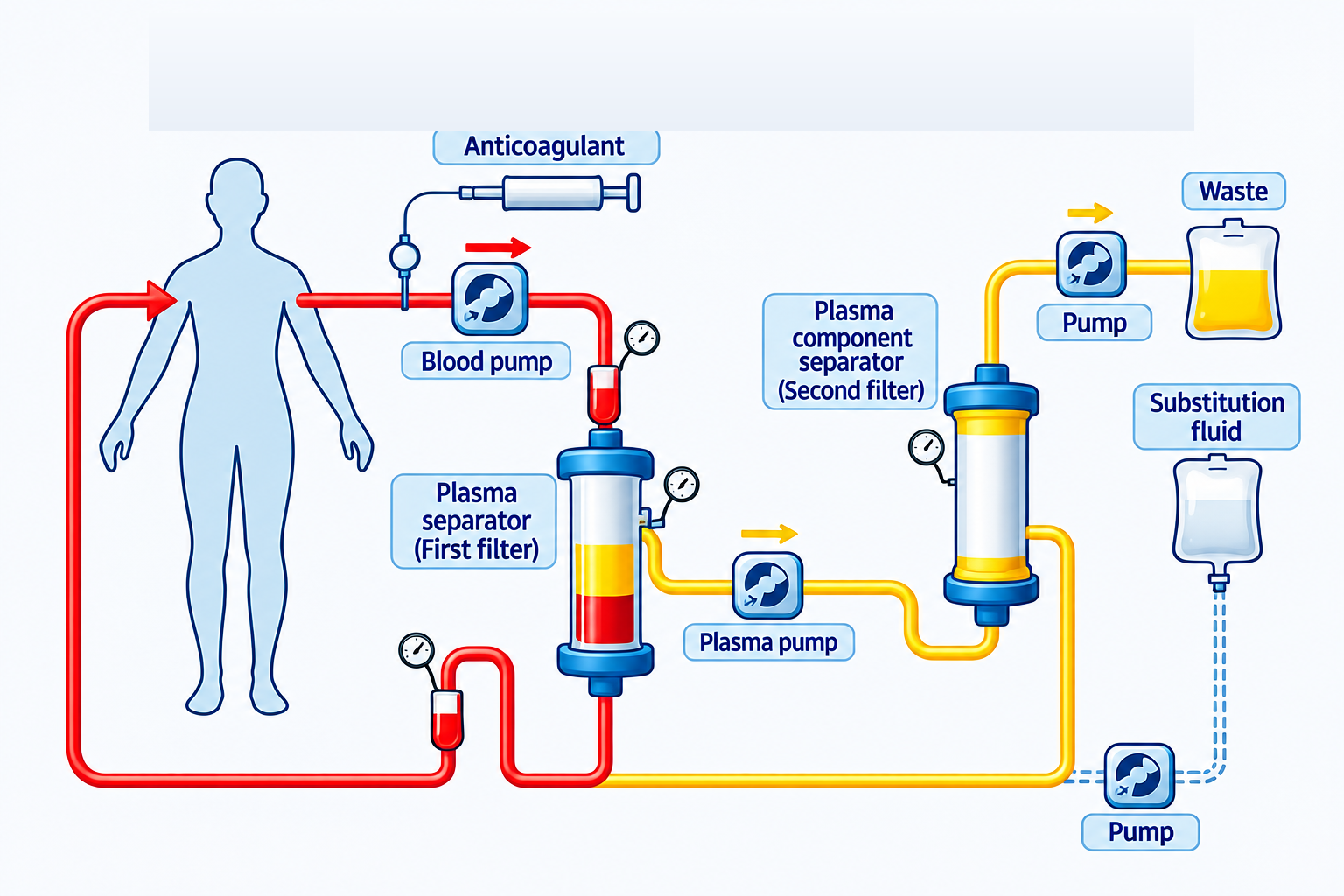
Whole blood passes through a plasma separator. The blood cells remain on the blood side; plasma is transferred to the second circuit. Anticoagulation, blood flow, plasma extraction rate and transmembrane pressure are limited by the platform, patient and membrane instructions. [1][5][7]
Stage 2 — Plasma fractionation
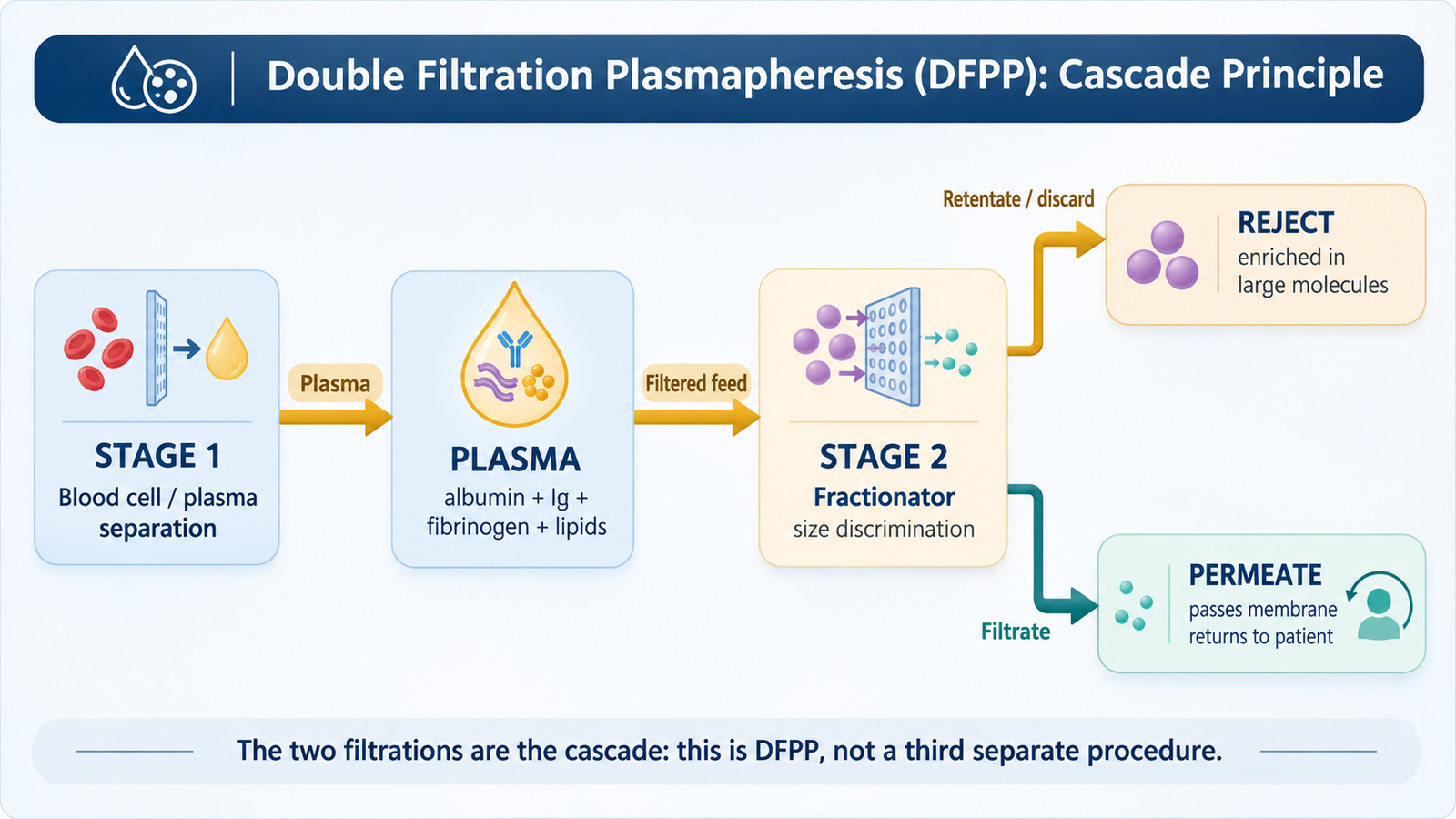
The separated plasma passes through a plasma fractionator whose permeability is different from that of the primary separator. A fraction of larger or less permeable molecules is concentrated in the retentate and discarded. Filtered plasma (permeate) returns with cellular blood components. Depending on the system, a small volume of discarded retentate and other losses must be replaced. [5][7][9]
Cascade filtration: why the second filter determines the therapy
What makes the procedure “cascade” filtration is the series arrangement of two membrane steps. Clinical behavior depends heavily on the fractionator's rejection and sieving profile. A filter optimized to reject IgG may preserve albumin differently from one optimized for LDL particles or very large plasma proteins. The membrane does not identify a molecule by its biological role: molecular geometry, concentration and operating conditions also matter. [6][9][10]

Rheopheresis is a specialized application of membrane differential filtration that aims to reduce selected macromolecules affecting blood rheology, rather than simply replicating plasma exchange for every disease. It should be considered a distinct clinical application requiring its own evidence, not proof that all DFPP procedures improve microcirculation. [15]
Plasma separators and fractionators: examples and selection
It is essential not to confuse the primary plasma separator (which separates plasma from cells) with the secondary plasma fractionator (which fractionates proteins in the isolated plasma). For DFPP, select a validated pairing based on the clinical target, expected protein losses and the current technical documentation. [9][10][11]
| Device family / examples | Role | Practical comment | Evidence |
|---|---|---|---|
| Plasmaflo OP; Granopen 060 | Primary plasma separator | Generates a cell-free plasma stream for secondary processing. These are not the fractionators. | [9][11] |
| Asahi Cascadeflo EC-20W, EC-30W, EC-40W, EC-50W | Secondary fractionator | Different pore-size profiles; the manufacturer lists EC-20W as smallest pores and EC-50W as largest. Selection is target dependent. | [9] |
| Medopen 10 / Medopen 30 | Secondary fractionator | Distributor documentation describes Medopen 10 for IgG-focused removal and Medopen 30 for LDL-focused removal. Verify the specific model and current IFU. | [10][11] |
| Evaflux 2A20 / 5A20 | Secondary fractionator | Catalogue examples of fractionators for different molecular targets; do not infer universal flows or treated volumes from the model name. | [10] |
What does DFPP remove—and what may be lost?
The technique is semi-selective rather than antigen-specific. It may be configured to reduce certain immunoglobulins, immune complexes, lipoproteins, fibrinogen and other large proteins. The concentrations of smaller molecules can be better preserved than in conventional TPE, but that does not guarantee preservation of albumin or coagulation factors. [6][7][12][18]
| Plasma constituent | Expected principle | Important limitation |
|---|---|---|
| IgG / IgM and immune complexes | Larger or poorly permeable fractions may be retained by selected filters. | IgG selectivity varies by fractionator; off-target removal may be clinically important. |
| LDL and other large lipoproteins | Often retained using fractionators configured for lipoprotein removal. | Not equivalent to every lipoprotein apheresis technology or indication. |
| Fibrinogen and coagulation factors | Substantial depletion is possible. | Bleeding risk and the need for post-procedure monitoring or replacement. |
| Albumin | Often passes into the returned permeate to a greater extent than larger targets. | Albumin loss may still occur; replacement need is not necessarily zero. |
Principle rather than a device-validated clearance claim. Actual removal and conservation are governed by the named membrane, pressures, flow, treated volume and indication. [7][9][12]
Historical and current clinical indications
The first clinical development was motivated by large-molecule diseases and the limitations of conventional plasma exchange. Today, DFPP has been used in selected immune-mediated neurological, renal, transplantation, lipoprotein and rheological conditions. Study use does not mean established first-line therapy. Check the named indication, exact modality and ASFA category rather than assuming that a TPE recommendation automatically extends to DFPP. [1][7][8]
| Clinical field | Illustrative applications reported | Interpretation | References |
|---|---|---|---|
| Neurology | Myasthenia gravis, selected inflammatory neuropathies, demyelinating disorders. | Reported clinical experience includes mixed cohorts. DFPP and TPE are not interchangeable on evidence alone. | [11][13] |
| Transplantation | ABO-incompatible desensitization, antibody-mediated conditions. | Selection depends on the antibody target and transplant protocol; IA or TPE may be preferred. | [8] |
| Metabolic / lipoprotein disorders | Selected severe dyslipidemias and other large-molecule targets. | Different lipoprotein apheresis technologies have different evidence and regulatory indications. | [7][15] |
| Autoimmune / dermatologic | Selected refractory antibody-mediated presentations. | Many reports are observational or disease-specific; evidence is uneven. | [7][16] |
| Ophthalmology / rheology | Selected applications of rheopheresis / membrane differential filtration. | Not routine treatment for every vascular or macular disorder; guideline categorization matters. | [1][15] |
DFPP, cascade filtration, TPE and plasma adsorption: differences
| Feature | DFPP / cascade filtration | Conventional TPE | Plasma adsorption / IA |
|---|---|---|---|
| Main processing | Primary plasma separation + secondary membrane fractionation | Plasma removed and replaced after plasma separation | Plasma separated, then passed through sorbent / ligand |
| What is discarded? | Macromolecule-rich retentate and circuit losses | Essentially all separated plasma volume | Usually sorbent-bound targets; plasma largely returned |
| Selectivity | Semi-selective (size / shape / membrane properties) | Broad removal of plasma constituents | Dependent on adsorbent or ligand chemistry |
| Replacement | Often less than TPE, but may still be necessary | Required for removed plasma volume | Often limited replacement, depending on circuit |
| Complications to watch | Fibrinogen loss, albumin loss, clotting, membrane pressure | Citrate effects, allergy, hypotension and protein loss | Sorbent-related reactions, target/off-target losses, circuit events |
Although DFPP is sometimes called “selective plasma exchange,” it should not be presented as a full exchange of plasma or as antibody-specific adsorption. Each technique has its own device requirements and evidence base. [1][5][7]
What happens during a DFPP session?
1 · Confirm the clinical indication
Define the target and the intended measurable response; validate that the selected technology is appropriate for the diagnosis and that the planned filters are approved and compatible. [1][9]
2 · Establish vascular access and assess risk
Assess blood counts, hemodynamics, fibrinogen, coagulation, albumin, electrolytes and medications as appropriate to the patient and intended treatment. Set an anticoagulation and volume-balance plan. [12][14]
3 · Separate blood cells from plasma
Blood enters the plasma separator, which retains circulating cells and generates a plasma fraction for treatment.
4 · Fractionate the plasma
The secondary membrane separates a discarded, concentrated retentate from returned permeate; pressures, flows and loss volumes are monitored continuously. [5][9]
5 · Return blood cells and filtered plasma
The treated permeate rejoins cellular components, with additional replacement fluids where indicated. Clinicians reassess protein losses and clinical response. [7][12]
6 · Rinsing by flush
During treatment, the waste clamp remains closed and the rinsing pump is stopped. When the transmembrane pressure (TMP) reaches a predefined threshold, the clamp opens and the pump starts. This reverses the pressure direction within the fractionator fibers, allowing accumulated substances to detach from the membrane and be carried to waste by the rinsing fluid.
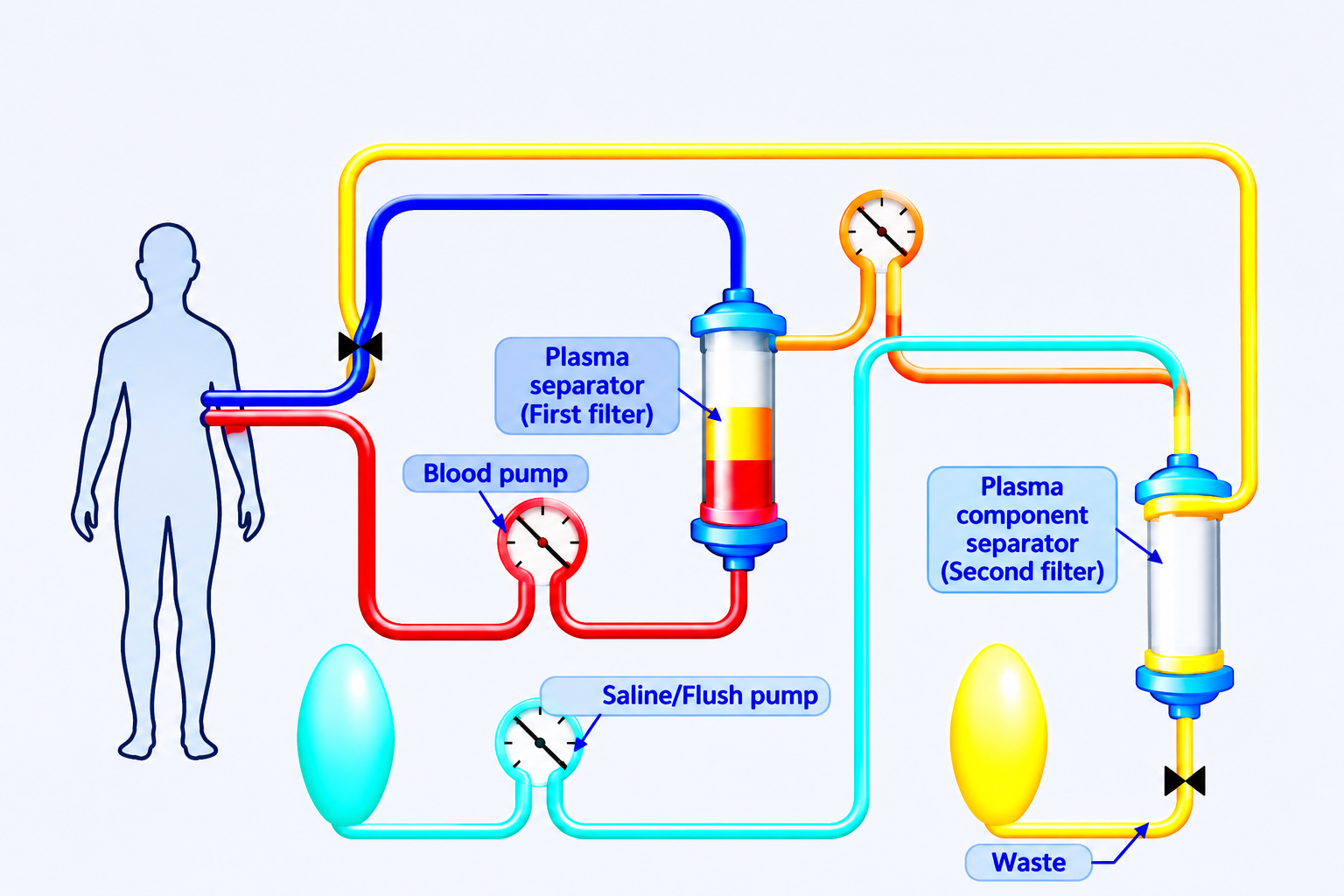
7 · Continuous rinsing
The rinsing pump runs continuously to withdraw part of the plasma concentrated in retained substances from the fractionator. This helps relieve pressure within the fibers, but does not actively dislodge substances adhering to the membrane. Because patient plasma is used to carry the concentrated material away, some plasma is continuously lost to waste.
Complications, monitoring and safety
DFPP introduces safety considerations that can differ from conventional TPE because the second filter can remove coagulation and other high-molecular-weight proteins. A 2024 prospective study of 37 patients documented mean fibrinogen decreasing from 332 ± 106 to 96 ± 44 mg/dL after the first session, under a monitoring and replacement protocol. This is evidence of the risk—not a universal expected reduction. [12]
| Potential complication | Prevention / surveillance | Response principle | Sources |
|---|---|---|---|
| Fibrinogen and clotting-factor depletion | Pre/post-session fibrinogen and coagulation assessment; review procedure frequency and planned surgery/bleeding risk. | Escalate clinically significant depletion or bleeding; replace blood products according to validated local thresholds and protocol. | [12][18] |
| Albumin depletion / oncotic shifts | Review protein balance, volume loss and albumin concentration, especially with repeated sessions. | Adjust replacement and treatment plan to indication and device performance. | [6][7] |
| Hypotension and access problems | Assess vital signs, vascular access, temperature, fluid balance and patient tolerance. | Slow or suspend therapy and treat hemodynamic instability per emergency protocol. | [14] |
| Circuit clotting / increased pressure | Validated anticoagulation; monitor transmembrane pressure and circuit alarms. | Investigate obstruction or hemolysis risk; avoid overriding safety interlocks. | [9][14] |
| Hemolysis, bleeding, allergic reactions | Monitor clinical symptoms, blood counts and infusion exposures; maintain emergency preparedness. | Stop/escalate according to local extracorporeal emergency response procedures. | [7][12] |
Anticoagulation: heparin and other protocols are reported in DFPP, but their use varies by platform and region. Citrate regimens cannot be simply transferred from centrifugal TPE or another extracorporeal system. Follow the combined machine, circuit and fractionator IFU. [14]
How frequently is DFPP performed worldwide?
There is no reliable published global annual count of double-filtration or cascade-filtration sessions that can be quoted as a single worldwide total. International registries often aggregate multiple apheresis procedures, while individual studies report selected countries, centers, indications and time periods. The following numbers are bounded examples, not estimates of worldwide activity. [13][14][19]
Frequently asked questions
Are DFPP and cascade filtration two different treatments?
Usually they are two names for the same two-membrane principle. Differences usually come from the specific fractionator, disease target, circuit and regional terminology rather than an entirely different method. [1][8]
Does DFPP always avoid albumin replacement?
No. Albumin conservation is a major goal, but albumin and other proteins can be lost in the retentate. Early DFPP series still used albumin supplementation, and replacement requirements remain protocol dependent. [3][7]
Does the fractionator remove only “bad” antibodies?
No. Fractionation is physical, not immune-antigen-specific. Useful immunoglobulins, fibrinogen and other proteins may also be removed. [5][12]
Does selecting Medopen 10 or Medopen 30 automatically set the correct plasma volume?
No. The model informs intended molecular target, not a universal treatment dose. The current device-specific IFU and clinical protocol must provide acceptable limits. [10][11]
Is DFPP generally safer or better than conventional TPE?
Not categorically. Potentially smaller replacement-fluid requirements are balanced against membrane performance, albumin/fibrinogen losses and disease-specific efficacy considerations. Match technique to the clinical indication and evidence. [1][7][12]
Key terms and take-home messages
| Term | Definition |
|---|---|
| Plasma separator | First membrane: separates plasma from blood cells. |
| Plasma fractionator | Second membrane: separates plasma constituents by membrane permeability. |
| Retentate / concentrate | Macromolecule-enriched stream removed as waste. |
| Permeate / filtrate | Portion of fractionated plasma that passes the membrane and returns to the patient. |
| Sieving / rejection | Measures of membrane permeability and relative retention of substances under specified conditions. |
| DFPP / cascade filtration | Usually synonymous labels for sequential plasma separation and plasma fractionation. |
Scientific, historical and technical references
The linked sources include original historical reports, current practice guidance, reviews, observational data and device technical literature. Manufacturer and distributor materials establish product claims, not independently proven clinical benefit.
- Zantek ND, Alquist CR, Hofmann JC, et al. American Society for Apheresis (ASFA). Guidelines on the Use of Therapeutic Apheresis in Clinical Practice: The Tenth Special Issue. J Clin Apher. 2026;41(S2):e70141. Open reference ↗
- Agishi T, Kaneko I, Hasuo Y, et al. Double filtration plasmapheresis. Trans Am Soc Artif Intern Organs. 1980;26:406–411 (first clinical report). Open reference ↗
- Agishi T, Kaneko I, et al. Double Filtration Plasmapheresis (1980 paper reprinted in Ther Apher. 2000;4:29–33). Open reference ↗
- Cassuto-Viguier E, Quaranta JF, et al. Echange plasmatique par filtration en cascade: étude clinique et biologique. Presse Med. 1984;13:2359–2362. Open reference ↗
- Agishi T. Selective removal of pathogenetic macromolecules directly from whole blood by double filtration technique. Int J Artif Organs. 1986;9:355–358. Open reference ↗
- Agishi T, Mineshima M. Separation and fractionation of plasma by double-filtration technique. J Membr Sci. 1989;44:47–54. Open reference ↗
- Li D, Liu X, Wang Y, Ji W. Recent progress in double filtration plasmapheresis. Hemodial Int. 2026;30:18–25. Open reference ↗
- Therapeutic apheresis in kidney transplantation: An updated review. World J Transplant. 2019. Open reference ↗
- Asahi Kasei Medical. Cascadeflo EC fractionator: EC-20W, EC-30W, EC-40W and EC-50W specifications and intended uses (manufacturer source). Open reference ↗
- LINC Medical. Blood purification catalogue. Medopen 10/30 and Evaflux 2A20/5A20 fractionators (distributor source; confirm current IFU). Open reference ↗
- Therapeutic plasma exchange and double filtration plasmapheresis in severe neuroimmune disorders. Clinical series using Granopen / Medopen; 2020. Open reference ↗
- The effects of double-filtration plasmapheresis on coagulation profiles and the risk of bleeding. J Formos Med Assoc. 2024;123:899–903. Open reference ↗
- Real-world application of plasmapheresis for neurological disease: Japan-Plasmapheresis Outcome and Practice Patterns Study. Ther Apher Dial. 2023. Open reference ↗
- Risk factors for hypotension and technical complications during single-session double-filtration plasmapheresis: 15-year retrospective study (1,022 procedures). 2026. Open reference ↗
- Klingel R, Fassbender C, et al. Rheopheresis: rheologic, functional, and structural aspects. Ther Apher. 2000;4:348–357. Open reference ↗
- Hirano R, Namazuda K. Pleiotropic effects of double filtration plasmapheresis. Ther Apher Dial. 2024;28:825–829. Open reference ↗
- The role of double-filtration plasmapheresis in severe early-onset maternal erythrocyte alloimmunization. BMC Pregnancy Childbirth. 2025. Open reference ↗
- How to improve clotting factors depletion in double-filtration plasmapheresis. J Clin Apher. 2021;36:766–774. Open reference ↗
- World Apheresis Association Registry: 2023 update. Transfus Apher Sci. 2023. (Broader apheresis registry; not global DFPP denominator.) Open reference ↗