What is plasma adsorption?
Plasma adsorption (PA) is an extracorporeal blood purification method in which plasma is first separated from a patient's blood cells, exposed to a sorbent or affinity-binding material, then returned to the patient after treatment. The selected molecules are retained predominantly by a column or membrane-bound adsorbent; the plasma itself is normally not discarded as it is in conventional therapeutic plasma exchange (TPE). [1][5][7]
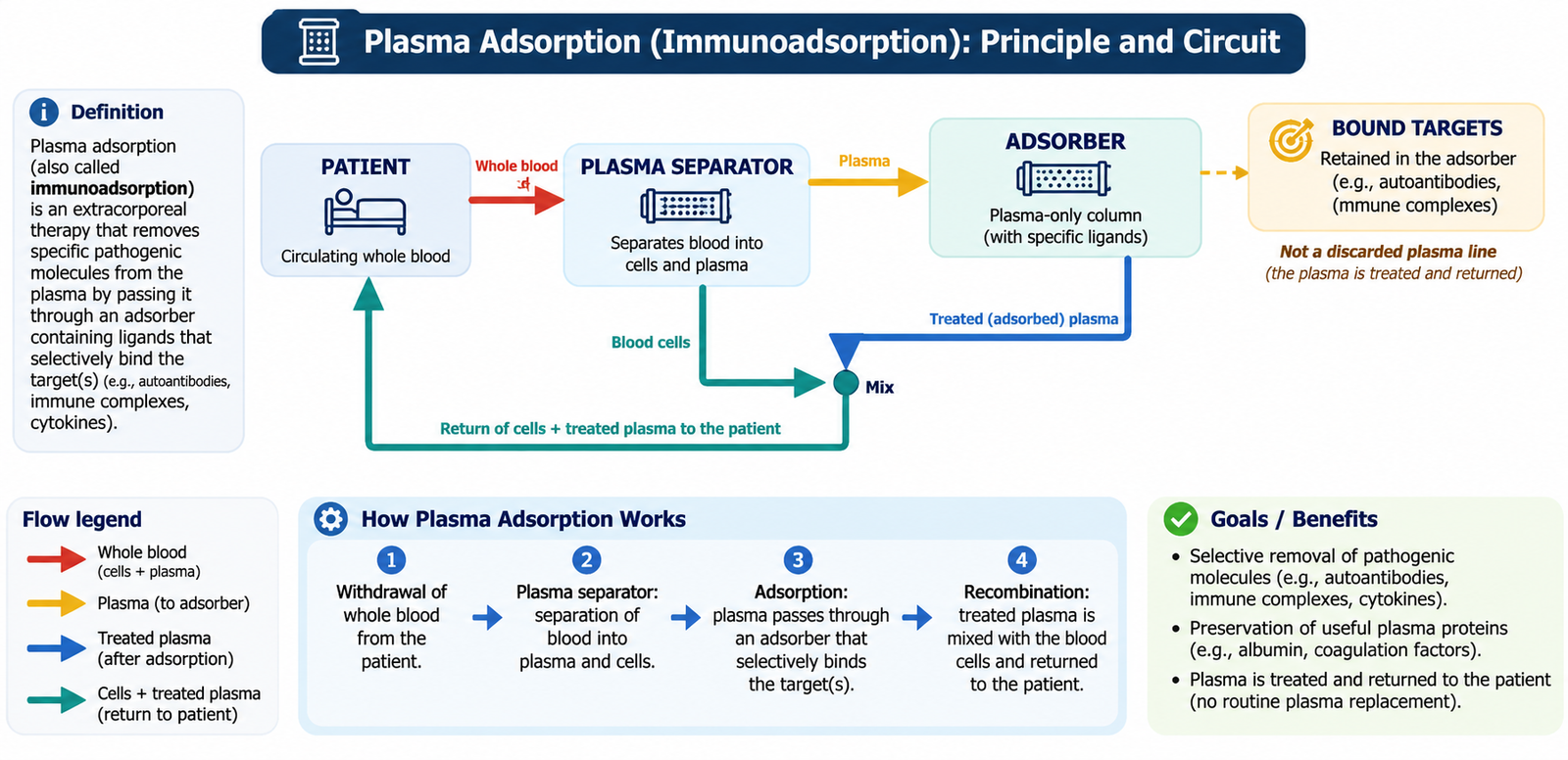
What “plasma adsorption” includes — and what it does not
Plasma adsorption is an umbrella description for several physicochemical methods. Clinical literature sometimes divides it into more specific categories according to the therapeutic target or ligand. The terms selective and semi-selective depend on the actual sorbent, not the word adsorption alone. [1][3][4]
| Concept | What passes through the therapeutic device | Key distinction |
|---|---|---|
| General plasma adsorption | Separated plasma | Sorbent retains selected constituents; most plasma returns. |
| Bilirubin / bile-acid adsorption | Separated plasma | Typically ion-exchange or other affinity matrix aimed at cholestatic solutes. |
| Lipoprotein adsorption | Separated plasma | Selected LDL/Lp(a)-binding columns; other LDL therapies use precipitation or filtration instead. |
| Immunoadsorption | Separated plasma | Subcategory targeting antibodies or immune complexes using specific ligands. |
| Whole-blood hemoadsorption | Whole blood | Separate pathway: the entire blood stream passes through a validated blood-compatible sorbent. |
| TPE | Separated plasma is removed | Removed plasma is replaced with appropriate fluid. |
| DFPP / cascade filtration | Separated plasma through a second membrane | Size-dependent fractionation, not target binding to sorbent chemistry. |
History: from plasma exchange to selective plasma adsorption
The historical motivation for plasma adsorption was to retain useful plasma constituents while removing selected disease-associated molecules. Early TPE removed proteins non-selectively, including beneficial components, and required replacement fluids. More selective sorbent systems were developed as lipoprotein apheresis and plasma affinity technologies matured. [2][3][4]
1967 · Early plasma-exchange treatment of severe hypercholesterolemia
De Gennes and colleagues used plasma exchange in homozygous familial hypercholesterolemia. This was a precursor to later targeted LDL-removal devices, not plasma adsorption itself. [3][4]
Early 1980s · Specific ligand technologies
Immunoadsorption targeting apolipoprotein B and other affinity approaches began to displace indiscriminate plasma exchange for selected indications; ligand specificity became a major design principle. [3][17]
1986 · Dextran-sulfate plasma LDL adsorption
Odaka and colleagues described early clinical experience with the LIPOSORBER LA-40 plasma perfusion adsorbent in familial hypercholesterolemia. Later LA-15 systems used two regenerable columns. [2][5][24]
1990 · Bilirubin-selective plasma adsorption
Studies investigated ion-exchange adsorbents including BR-350 for removing bilirubin and bile acids; early reports emphasized biochemical clearance and called for further clinical evaluation. [8][7]
2000s onward · Expanding adsorbent chemistry
Single-use and regenerable immunoadsorption columns, ligand-based systems, and combined extracorporeal methods expanded the plasma adsorption family. Clinical indications and evidence remained device- and disease-specific. [15][17][18]
2020s · Combined plasma adsorption for liver failure
Plasma bilirubin adsorption plus additional sorbents, sometimes followed by TPE, became the subject of modern observational studies, trials and meta-analyses. Guidance still distinguishes biochemical improvements from established survival benefit. [11][12][13]
How plasma adsorption works: the complete circuit
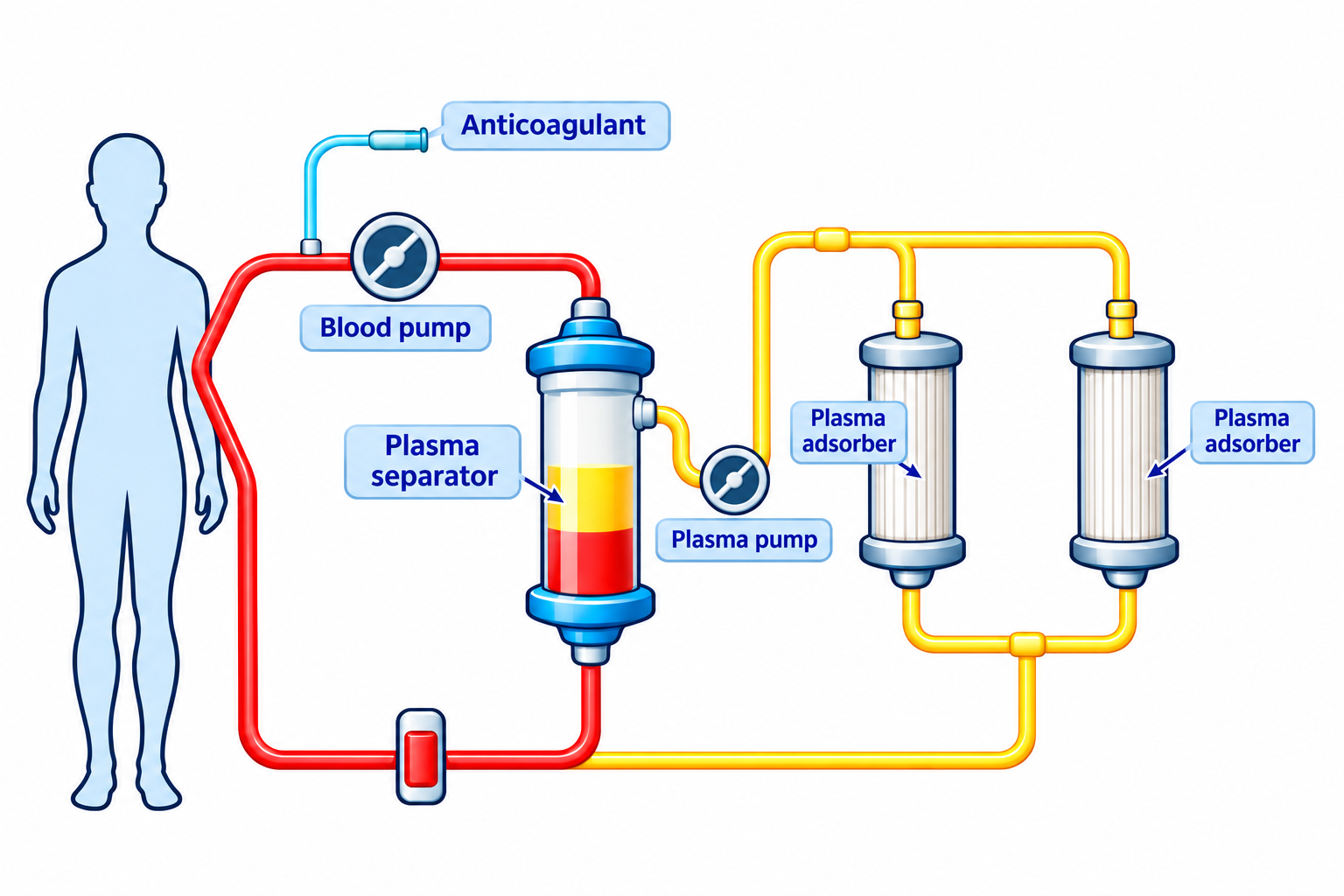
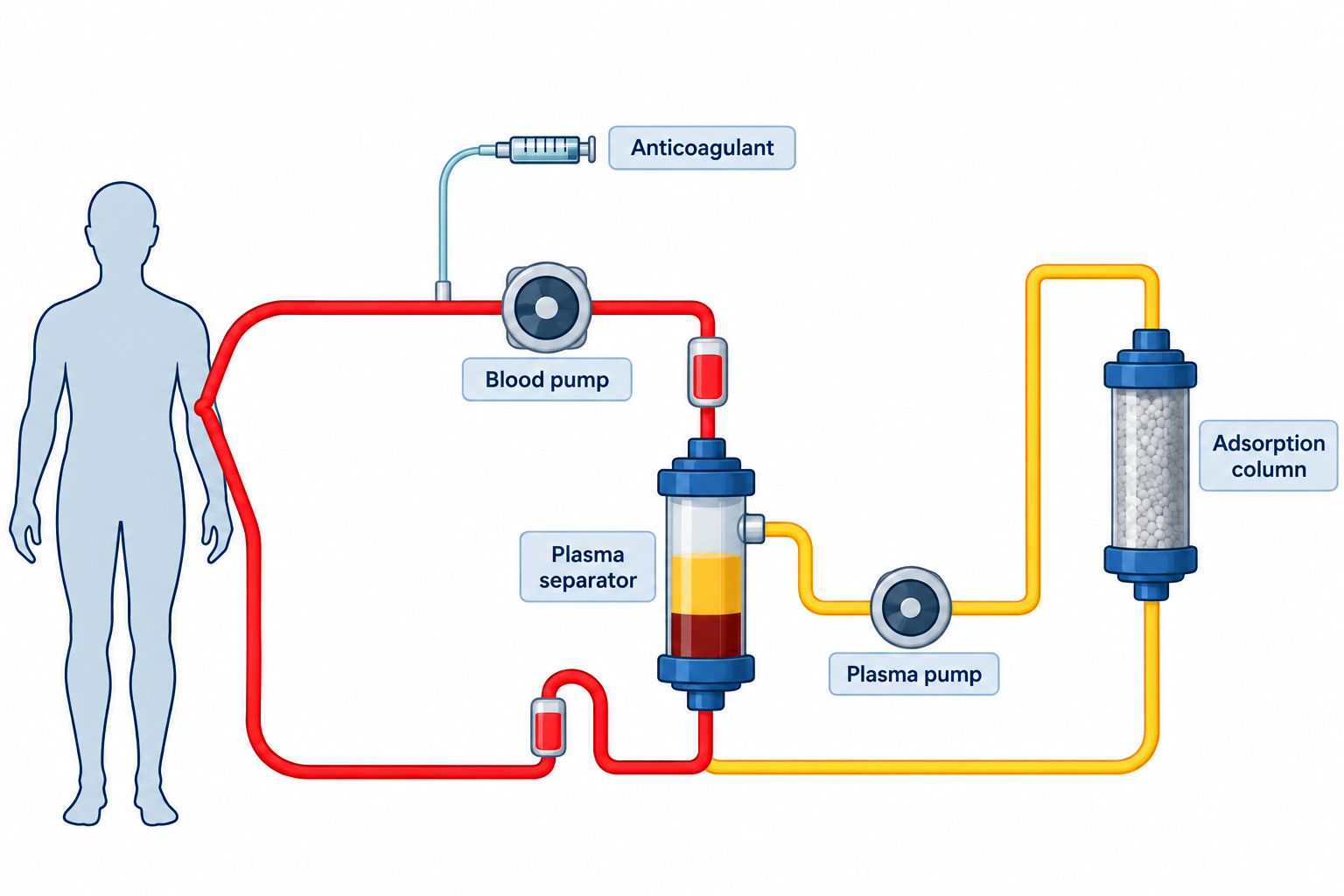
A typical system uses vascular access, an extracorporeal blood pump, a compatible plasma separator (membrane or centrifuge), an adsorbent column, and a validated plasma/blood return pathway. In plasma adsorption, the second component is an adsorber—not a second membrane fractionator. [1][5][7]
Before the adsorber
Blood cells are separated from the plasma. Platelet contamination, plasma flow, access pressures and anticoagulation influence circuit performance. The plasma-only cartridge is exposed to plasma, not whole blood.
After the adsorber
Treated plasma is recombined with the cellular stream and returned to the patient. The target molecules remain within the adsorbent according to the binding capacity of that cartridge. Routine TPE-style replacement is generally unnecessary, but clinically relevant fluid/protein losses must still be assessed.
Sorbent chemistry: what actually captures the target?
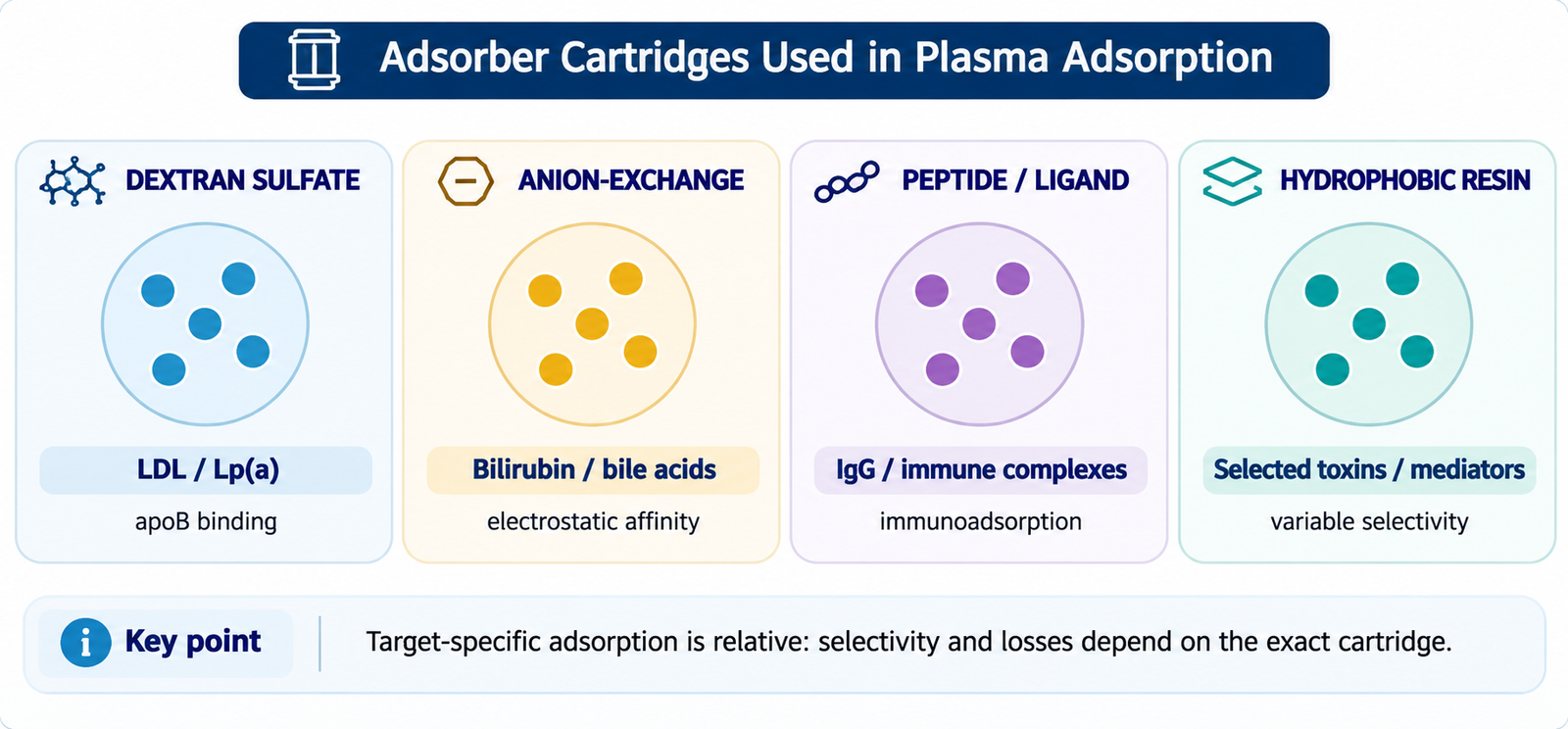
Adsorption occurs because target molecules interact with the surface of the sorbent through electrostatic, hydrophobic, affinity or ligand–target interactions. Adsorption is never perfectly selective: target competition, pH, protein binding, surface charge, cartridge saturation and changes in flow all affect removal. [3][4][8][17]
| Type | Representative target | Representative example / boundary |
|---|---|---|
| Dextran sulfate on cellulose | apoB-containing lipoproteins (LDL, Lp(a), VLDL) | LIPOSORBER LA-15: plasma-path twin adsorber; distinguish LIPOSORBER D whole-blood system. [5][27] |
| Anion-exchange polymeric resin | Bilirubin and bile acids | PLASORBA BR-350, Jafron BS330 and Biosun DX are distinct product families. [7][10][19] |
| Synthetic peptide / biologic ligand | Immunoglobulins, immune complexes | GLOBAFFIN and other IA systems; target profiles differ. [1][15] |
| Amino-acid ligands | Selected antibodies or complexes | IMMUSORBA TR (tryptophan), PH (phenylalanine). [16][17] |
| Antigen-specific carbohydrate ligand | Anti-A / anti-B antibodies | Glycosorb ABO — specialized immunoadsorption used in transplant protocols. [18] |
| Hydrophobic / mixed affinity resin | Broad classes of metabolites or mediators | Research and device examples exist, but class claims cannot substitute for validated clinical outcomes. [22][23] |
Single-use versus regenerable plasma adsorption
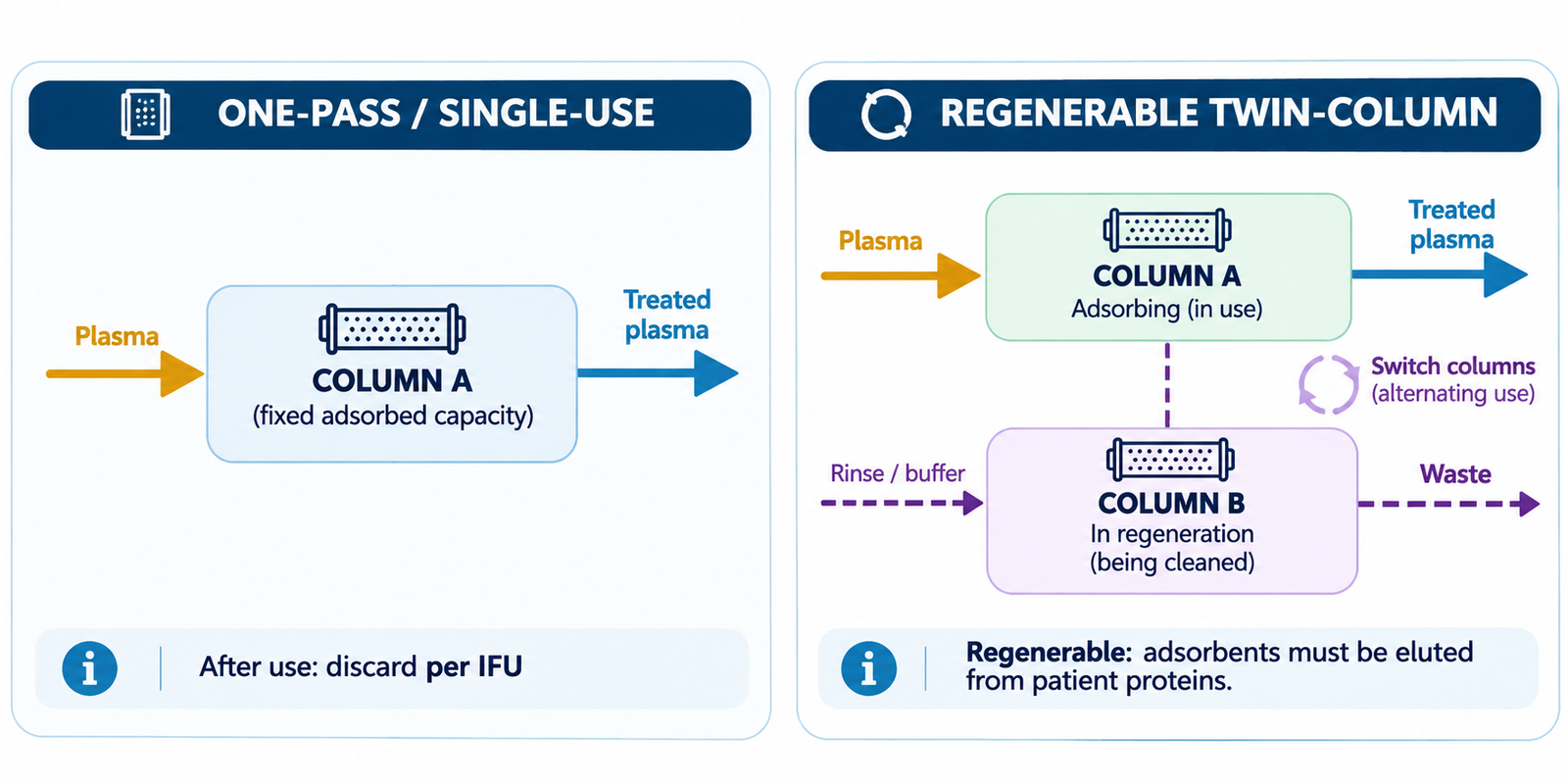
Single-use columns have finite binding capacity and are discarded after their labeled use. Regenerable columns can be alternated during a session: one adsorbs plasma targets while the other is washed/eluted through a separate validated circuit. The label “two columns” alone does not prove regeneration. [5][15][18][24]
Plasma adsorption for bilirubin and bile acids
In liver-related hyperbilirubinemia, the plasma route allows adsorbers to interact with bilirubin and bile acids, often through charged polymeric resins. Adsorption may reduce measured bilirubin concentrations, but this does not necessarily restore liver synthetic function or improve survival. Biochemical response, hemodynamic status and clinical outcomes must be assessed separately. [8][9][13][14]
| Documented example | Adsorbent / approach | Important limitation |
|---|---|---|
| PLASORBA BR-350 (Asahi Kasei) | Styrene-based adsorbent for bilirubin/bile acids | Explicit plasma-only device; manufacturer cautions against whole blood or platelet-rich plasma. [7][26] |
| BS330 (Jafron) | Ion-exchange adsorber for bilirubin/bile acids | Often used in DPMAS; treatment pathway and associated second column must be verified. [10][11] |
| DX series (Biosun / Biosky) | Ion-exchange bilirubin column | Manufacturer describes separated-plasma operation; regulatory status must be checked per region. [19] |
| BR-350 clinical study (2026) | Plasma adsorption compared with albumin dialysis | Biochemical improvement reported; small/specific studies cannot establish universal mortality benefit. [9] |
DPMAS: combined adsorption after plasma separation
Double plasma molecular adsorption system (DPMAS) commonly refers in published liver-support studies to a separated-plasma circuit with two adsorbers, often BS330 plus HA330-II. The latter product can be described as a hemoperfusion cartridge in other contexts; in the cited DPMAS protocols, however, the plasma separator directs separated plasma through both adsorbers. [10][11][23]
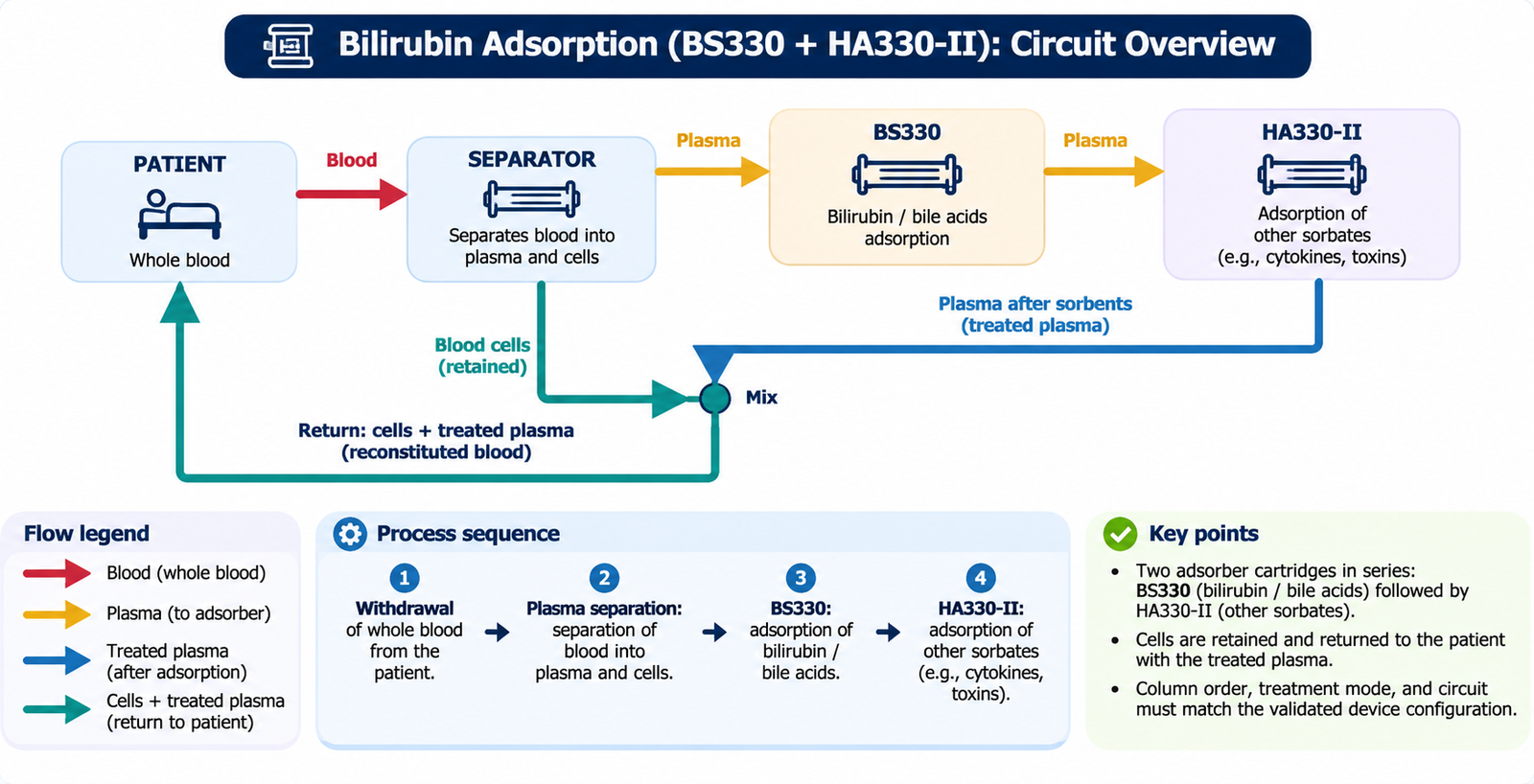
Some protocols use a distinct, subsequent low-volume plasma exchange phase. That combined regimen is not the same intervention as adsorption alone and can require plasma replacement only during the exchange portion. Comparative trials and a 2026 meta-analysis have reported encouraging biochemical and some clinical endpoints, but study heterogeneity and guideline restrictions mean routine mortality benefit cannot be assumed for every population. [12][13][23]
LDL and lipoprotein(a) plasma adsorption
Plasma adsorption plays an established role among several technologies used for lipoprotein apheresis in highly selected patients with severe inherited lipid disorders. Dextran-sulfate adsorbents bind apoB-containing particles, including LDL and Lp(a). The clinical indication is driven by cardiovascular risk, lipid levels, prior treatment and country-specific criteria—not by the ability to reduce a laboratory value alone. [2][4][5]
Plasma adsorption example
LIPOSORBER LA-15: plasma is separated before entering two alternating, regenerable dextran-sulfate adsorption columns. Most treated plasma is returned with the blood cells. [5][24]
Not a plasma-only example
LIPOSORBER D: marketed for direct whole-blood lipoprotein apheresis. It should not be classified as plasma adsorption simply because it also removes LDL and Lp(a). [27]
Immunoadsorption: a targeted branch of plasma adsorption
Immunoadsorption (IA) uses a plasma sorbent or ligand selected for antibody binding. It may be relatively broad (IgG subclass removal), disease-targeted, or specific for anti-A/anti-B isoagglutinins. IA is often discussed as a separate therapeutic modality even though its physical circuit is a form of plasma adsorption. [1][15][17][18]
| Example | Selected ligand / target | Workflow |
|---|---|---|
| GLOBAFFIN | Synthetic peptide GAM146; broad immunoglobulin binding | Regenerative twin columns with specified companion equipment. [15] |
| IMMUSORBA TR | Tryptophan ligand; autoimmune neurology targets | Single-use plasma adsorption; note ACE-inhibitor and platelet-rich plasma restrictions. [16][17] |
| IMMUSORBA PH | Phenylalanine ligand; selected immune complexes/antibodies | Single-use plasma immunoadsorption. [17] |
| Glycosorb ABO | Immobilized blood-group carbohydrate determinants | Specific anti-A or anti-B reduction in selected ABO-incompatible transplant protocols. [18] |
Prescribing implications: processed plasma volume and target reduction differ by ligand affinity, antibody kinetics, column saturation or regeneration and clinical goal. Do not use a lipoprotein adsorption protocol or general “2–3 plasma volumes” as a default for every IA system. [1][15]
Related and emerging techniques: where the boundary lies
Coupled plasma filtration and adsorption (CPFA) separates plasma, treats it in a sorbent cartridge and reinfuses it, often alongside other extracorporeal components. The HERCOLE study evaluated bilirubin and bile-acid reduction in a small observational liver-failure cohort; this should not be interpreted as universal clinical efficacy. [22]
Other experimental or commercial plasma adsorbers may be proposed for protein-bound toxins, immune mediators or inflammatory conditions. The proper evaluation sequence is: (1) is it truly plasma-side, (2) what exact molecule and mechanism is claimed, (3) is removal demonstrated in humans, and (4) is patient-centered clinical benefit established? Manufacturer descriptions alone cannot answer the fourth question. [1][13][22]
Plasma adsorption versus TPE, DFPP and hemoadsorption
| Feature | Plasma adsorption | Conventional TPE | DFPP / cascade | Whole-blood hemoadsorption |
|---|---|---|---|---|
| Processing substrate | Separated plasma | Separated plasma removed | Separated plasma across second membrane | Whole blood |
| Main separation / capture | Affinity / physicochemical binding | Bulk removal | Membrane size-based sieving / fractionation | Sorbent direct blood contact |
| What is discarded? | Targets mostly retained on sorbent | Removed plasma | Retentate plus circuit losses | Targets retained on sorbent |
| Usual replacement | No full plasma replacement in a pure adsorption circuit | Plasma and/or albumin replacement | Variable: may need targeted replacement | No TPE-style replacement solely from adsorption |
| Key limitation | Capacity, selectivity and off-target adsorption | Loss of protective plasma proteins | Fibrinogen/albumin loss; filter pressures | Blood–sorbent contact, platelet/coagulation/drug adsorption |
Clinical indications and strength of evidence
Evidence for plasma adsorption is not uniform. Outcomes from one adsorber cannot be transferred to another ligand or another disease. Separate approved intended use, mechanistic evidence and patient-centered benefit. [1][4][13]
| Clinical domain | Reported use / goal | Evidence interpretation |
|---|---|---|
| Severe familial dyslipidemia, refractory LDL/Lp(a) | Lipoprotein adsorption in selected high-risk patients | Mature clinical approach within lipoprotein apheresis, but eligibility varies among countries and devices. [4][5] |
| Hyperbilirubinemia / cholestasis | Bilirubin/bile-acid removal with plasma-specific sorbent | Biochemical reduction documented; outcome benefit is disease- and study-specific. [8][9] |
| ACLF / artificial liver support | DPMAS alone or combined with TPE | RCT meta-analysis reports positive findings for some combination endpoints; EASL 2023 does not recommend routine artificial support outside trials. [12][13] |
| Autoimmune diseases and transplantation | Ig or isoagglutinin adsorption | Distinct IA/ABO protocols; consult the exact ASFA category and device IFU. [1][15][18] |
| Other novel plasma targets | Inflammatory mediators or protein-bound wastes | Preliminary, variable evidence; not a class-wide indication. [13][22] |
What happens during a session?
A generic PA workflow begins with indication and target definition, then proceeds through device selection and compatibility checks. The clinical team identifies the plasma separator, sorbent, validated tubing and cartridge position, anticoagulant, replacement needs (if any), processed-plasma endpoint, and monitoring and stop criteria. [1][5][7][16]
- Before: confirm indication, coagulation and blood counts; assess access, volume status, relevant drug/ACE-inhibitor exposure, baseline targeted laboratory tests, and current device labeling.
- Setup: use the matched plasma separator and the manufacturer-approved sorbent path; verify priming, degassing, pressure limits and fluid balance.
- During: assess clinical tolerance, plasma and blood flows, separator and adsorber pressures, circuit clotting, target molecule response where appropriate, and signs of hemolysis or hypersensitivity.
- After: monitor return balance, bleeding, relevant coagulation/protein indices and disease-specific response; plan drug administration around potential extracorporeal removal.
Complications and the safety architecture
Adverse events may arise from the vascular access, anticoagulation, separator, adsorber, target loss or unanticipated removal of useful molecules and drugs. Risk and monitoring vary markedly among circuits and cannot be assigned a single class-wide incidence. [1][6][7][16][25]
| Potential problem | Prevention and surveillance | Escalation principle |
|---|---|---|
| Hypotension / access problems | Baseline volume assessment; vital signs; access and extracorporeal pressure monitoring | Assess cause, pause/stop the procedure and manage according to local emergency algorithm. |
| Circuit clotting / pressure rise | Device-compatible anticoagulation, line and filter pressure checks, platelet contamination assessment | Stop before bypassing safety limits; follow IFU for circuit intervention. |
| Bleeding / platelet or fibrinogen reduction | Baseline and post-treatment CBC/coagulation as indicated; drug review | Escalate clinically significant bleeding and consider treatment termination. |
| Citrate effects / heparin reactions | Only approved anticoagulant protocol; monitor relevant calcium, ACT/aPTT and allergic/HIT risks | Use device- and patient-specific management; do not import heparin/citrate rates from other techniques. |
| ACE-inhibitor / bradykinin-related reactions | Screen medications and device contraindications, especially LA-15 and IMMUSORBA TR | Follow explicit IFU contraindications; urgent response to anaphylactoid signs. |
| Unexpected drug/protein adsorption | Review therapeutics, albumin, fibrinogen, Ig and disease markers as indicated | Adjust timing/doses with pharmacy and treating service rather than assuming no removal. |
| Incorrect plasma versus blood route | Confirm cartridge labeling, circuit compatibility, and flow direction | Do not proceed with an unvalidated whole-blood path for a plasma-only column. |
Manufacturer-specific example: BR-350 and IMMUSORBA TR explicitly prohibit whole-blood flow; LA-15 materials specify heparin anticoagulation and warn against ACD and ACE-inhibitor exposure. [6][7][16]
How many plasma adsorption treatments are performed worldwide?
No reliable comprehensive annual worldwide count of plasma adsorption procedures was identified. There is no unified denominator pooling liver adsorption, plasma lipoprotein adsorption, regenerative IA and investigational plasma sorbents across countries. Published registry figures represent partial, method-dependent samples. [20][21]
For context, the same WAA device-specific report also lists other immunoadsorption types and cascade filtration, but it does not track all platforms, countries, and years in a way that permits a validated world total. Do not add these partial categories together and call the result “global plasma adsorption”. [21]
Frequently asked questions
Can a single-use bilirubin column process 2–3 plasma volumes?
Not as a blanket rule. Processed volume depends on current device instructions, sorbent capacity, starting analyte concentration, flow and circuit pressures. A number that is appropriate for a regenerable immunoadsorber cannot be copied to a different bilirubin adsorber. [1][7][11]
Scientific, historical and technical references
- American Society for Apheresis (ASFA). Guidelines on the Use of Therapeutic Apheresis in Clinical Practice, Tenth Special Issue. Journal of Clinical Apheresis (September 2026). Definitions, indication categories, and distinctions between TPE, IA and lipoprotein apheresis. Open reference ↗
- Odaka M, et al. Adsorption of lipoprotein containing apolipoprotein-B through plasma separation for treatment of familial hypercholesterolemia. Int J Artif Organs. 1986;9:343–348. Early LA-40 clinical report. Open reference ↗
- Bambauer R, et al. LDL-Apheresis: Technical and Clinical Aspects. ScientificWorldJournal. 2012. Historical development and methodological comparisons. Open reference ↗
- Feingold KR. Lipoprotein Apheresis. Endotext, updated 6 February 2026. Current lipoprotein-apheresis approaches and international indication differences. Open reference ↗
- Kaneka Medical Europe. LIPOSORBER LA-15: plasma separation and regenerable twin-column dextran-sulfate adsorption. Open reference ↗
- U.S. FDA / Liposorber. LIPOSORBER LA-15 System — Important Safety Information. Heparin-only anticoagulation per the cited labeling and ACE-inhibitor contraindication. Open reference ↗
- Asahi Kasei Medical. PLASORBA BR-350 (L), specifications and explicit warning that it is a plasma-only column. Open reference ↗
- Sone J, et al. Assessment of bilirubin clearance capacity of a newly developed ion-exchange adsorption column and its possible use as supportive therapy in hepatorenal syndrome. J Clin Apher. 1990. Open reference ↗
- Plasma Adsorption Perfusion (BR-350) Versus Open Albumin Dialysis (OPAL) for Hyperbilirubinemia in Hepatic Failure in Cirrhotic Patients. Artificial Organs. 2026. Open reference ↗
- Jafron Biomedical. BS330 plasma bilirubin adsorption column — manufacturer product description. Open reference ↗
- Association between volume of processed plasma and total bilirubin reduction during plasma adsorption for severe liver disease. 2025. DPMAS component and processed-volume definitions. Open reference ↗
- Chen L, et al. Efficacy and safety of DPMAS combined with plasma exchange for ACLF: updated systematic review/meta-analysis of randomized trials. Eur J Med Res. 19 May 2026. Open reference ↗
- European Association for the Study of the Liver (EASL). Clinical Practice Guidelines on acute-on-chronic liver failure. J Hepatol. 2023. Cautious position on routine extracorporeal liver support. Open reference ↗
- EASL. Clinical Practice Guidelines: management of acute (fulminant) liver failure. J Hepatol. 2017. Limitations of adsorbent artificial-liver support outcomes. Open reference ↗
- Fresenius Medical Care. Immunoadsorption and GLOBAFFIN — synthetic peptide-GAM ligand, regenerative twin-column system. Open reference ↗
- Asahi Kasei Medical. IMMUSORBA TR-350(L) specifications, plasma-only use and ACE-inhibitor precaution. Open reference ↗
- Hirano R, Hirata N. Immunoadsorption using Immusorba TR and PH. Transfus Apher Sci. 2017;56:661–665. Open reference ↗
- Glycorex Transplantation. Glycosorb ABO product information — A, B and A/B antigen-specific single-use columns. Open reference ↗
- Foshan Biosun Medical. DX-series plasma bilirubin adsorption column — device-specific plasma route. Open reference ↗
- World Apheresis Association. The WAA apheresis registry, 2023 update: 58,355 heterogeneous apheresis procedures from 27 participating centers in 2018–2022. Open reference ↗
- Real-world safety data from the WAA registry for the Spectra Optia Apheresis System. J Clin Apher. 2025. Modality-specific registered counts; not global plasma-adsorption totals. Open reference ↗
- Donati G, et al. Detoxification of bilirubin and bile acids with intermittent coupled plasmafiltration and adsorption in liver failure (HERCOLE study). J Nephrol. 2021. Open reference ↗
- Integrative anticoagulation of nafamostat mesylate in DPMAS plus sequential half-dose plasmapheresis for patients with liver failure: randomized trial protocol. BMJ Open. 2025. Describes DPMAS plumbing; protocol is not outcome evidence. Open reference ↗
- Kaneka Medix. LIPOSORBER LA-15 product information (Japan): adsorbent selectivity, regeneration and replacement-fluid characteristics. Open reference ↗
- 2025 safety profile of DPMAS in liver failure and refractory hyperbilirubinemia (229 cases, retrospective). Open reference ↗
- Asahi Kasei Medical. PLASORBA BR-350(L) features, target substances and indication statements (manufacturer claims; not proof of clinical benefit). Open reference ↗
- Kaneka Medical Europe. LIPOSORBER plasma adsorption versus LIPOSORBER D direct whole-blood hemoperfusion. Open reference ↗