What is therapeutic plasma exchange?
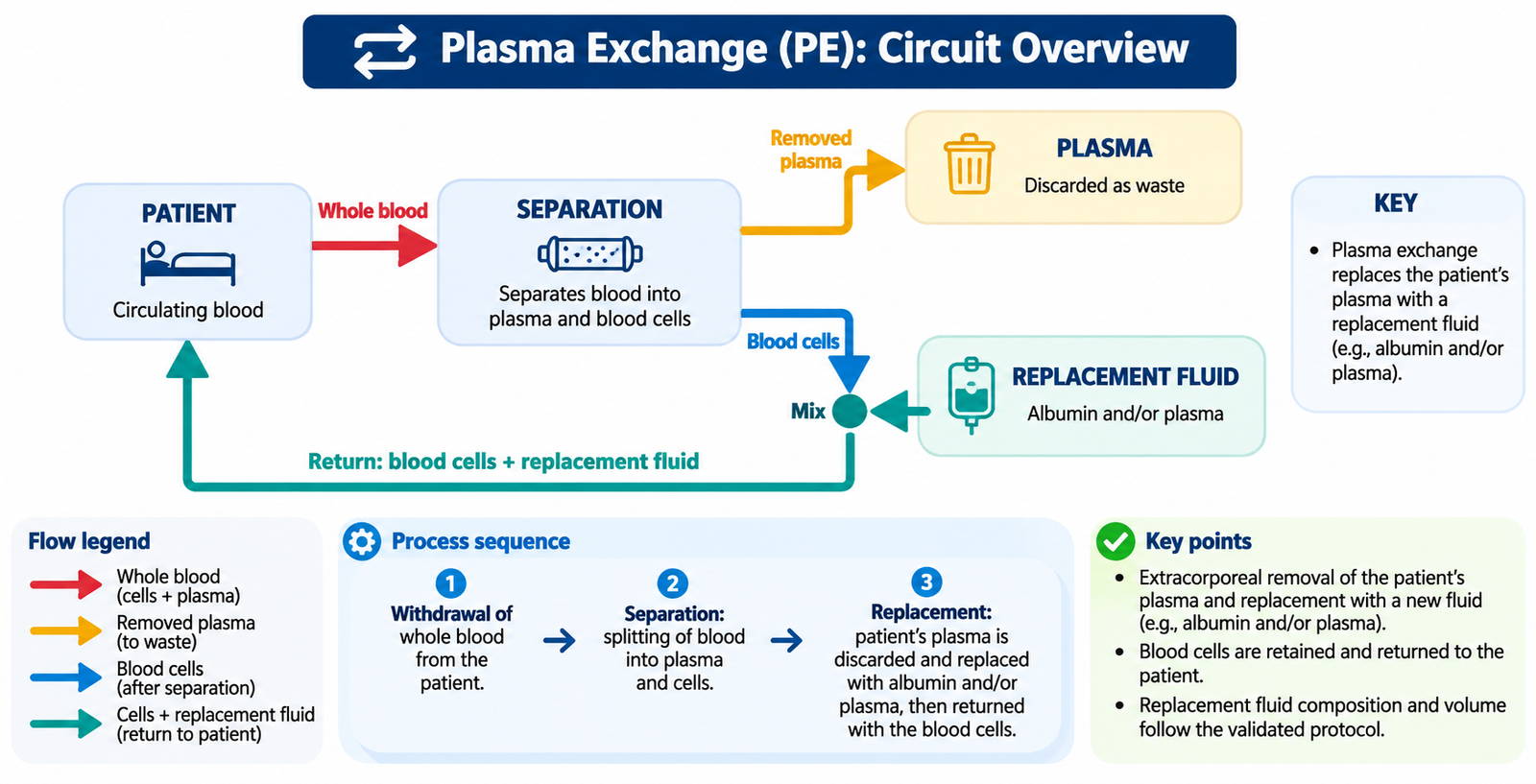
Therapeutic plasma exchange (TPE) is a medical procedure that removes circulating plasma from a patient while returning their cellular blood components with an appropriate replacement fluid. It is not a whole-blood transfusion and is not a plasma donation procedure. TPE can be performed with a centrifuge or through a membrane plasma filter. [1][5]
From experimental plasmapheresis to modern TPE
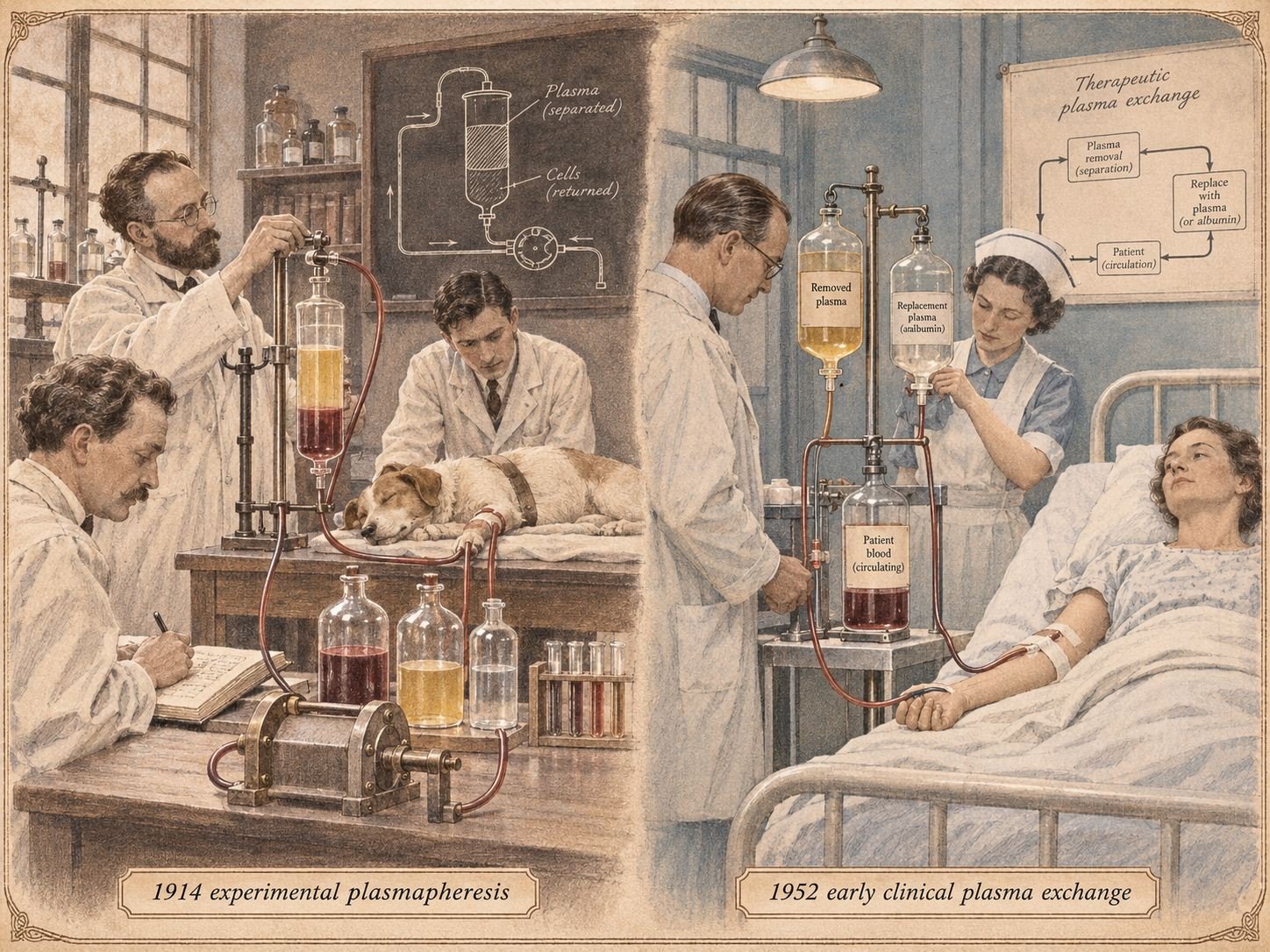
The history combines early experimental procedures, clinical applications in severe plasma-protein disorders, and later automation. Dates describing the “first plasmapheresis” differ depending on whether one means laboratory experiments, a named publication, or the first reported use in a human patient. [2][3][4]
1913–1914 · Independent experimental pioneers
Historical analysis describes Russian experiments by Yurevich and Rosenberg, with related findings subsequently reported in 1914. Separately, Abel, Rowntree and Turner published “Plasma Removal With Return of Corpuscles” in 1914 and introduced the term plasmaphaeresis. These were experimental procedures, not modern automated human TPE. [3][2]
1952 · Human therapeutic treatment of hyperviscosity
Historical reviews describe plasma removal in a patient with multiple myeloma-related hyperviscosity in 1952. This is a key early clinical indication: excess circulating paraprotein made blood abnormally viscous. [4]
Around 1960 · Waldenström macroglobulinemia
Reports of intensive plasmapheresis for macroglobulinemia made IgM-related hyperviscosity another formative clinical application. [4]
1960s–1970s · Automation and immunological indications
Automated cell-separator technologies expanded practical access. Plasma exchange developed a role in selected immune and neurologic disorders, beyond abnormal plasma-protein viscosity. The importance of a condition-specific evidence base became clearer over time. [4][1]
1978 · Membrane-based plasma exchange
Membrane plasma separation emerged as an alternative to density-based centrifugation. The use of plasma filters facilitated the procedure in nephrology and critical-care services. [5]
2026 · Evidence-based indications
The ASFA Tenth Special Issue, published in September 2026, includes 93 fact sheets and 183 graded indications for several therapeutic apheresis modalities. Not all of those indications are TPE indications. [1]
Physical principle and therapeutic purpose
What exactly is exchanged?
Whole blood contains cells suspended in plasma. Plasma carries proteins, immunoglobulins, complement, coagulation factors, electrolytes and many circulating disease mediators. TPE removes a portion of this plasma phase; the removed plasma is replaced with an appropriate fluid, while most blood cells return. Therapeutic effects arise from both removal of circulating substances and, in selected indications, provision of factors contained in the replacement plasma. [1][6]
How much can one session remove?
A common conventional prescription processes an exchange volume near 1–1.5 estimated patient plasma volumes (PV). In an ideal well-mixed single-compartment model without redistribution, an exchange of one PV removes about 63% of an initially circulating substance, and 1.5 PV about 78%. These are theoretical approximations, not a guarantee of clinical response. Extravascular redistribution, ongoing production, distribution volume, and procedure mechanics change real outcomes. [13][6]
| Quantity | Meaning | Why it matters |
|---|---|---|
| Estimated plasma volume (EPV) | Patient's estimated circulating plasma compartment. | Used as a basis for treatment planning, not a direct assay. |
| Plasma volume exchanged | Quantity of plasma removed and replaced in a session. | Often expressed as a multiple of EPV. |
| Processed whole blood | Blood passed through the separator to obtain plasma. | Usually exceeds the volume of plasma exchanged. |
| Replacement volume | Albumin, donor plasma or another permitted replacement strategy. | Important to maintain hemodynamics and appropriate plasma factors. |
Centrifugal therapeutic plasma exchange
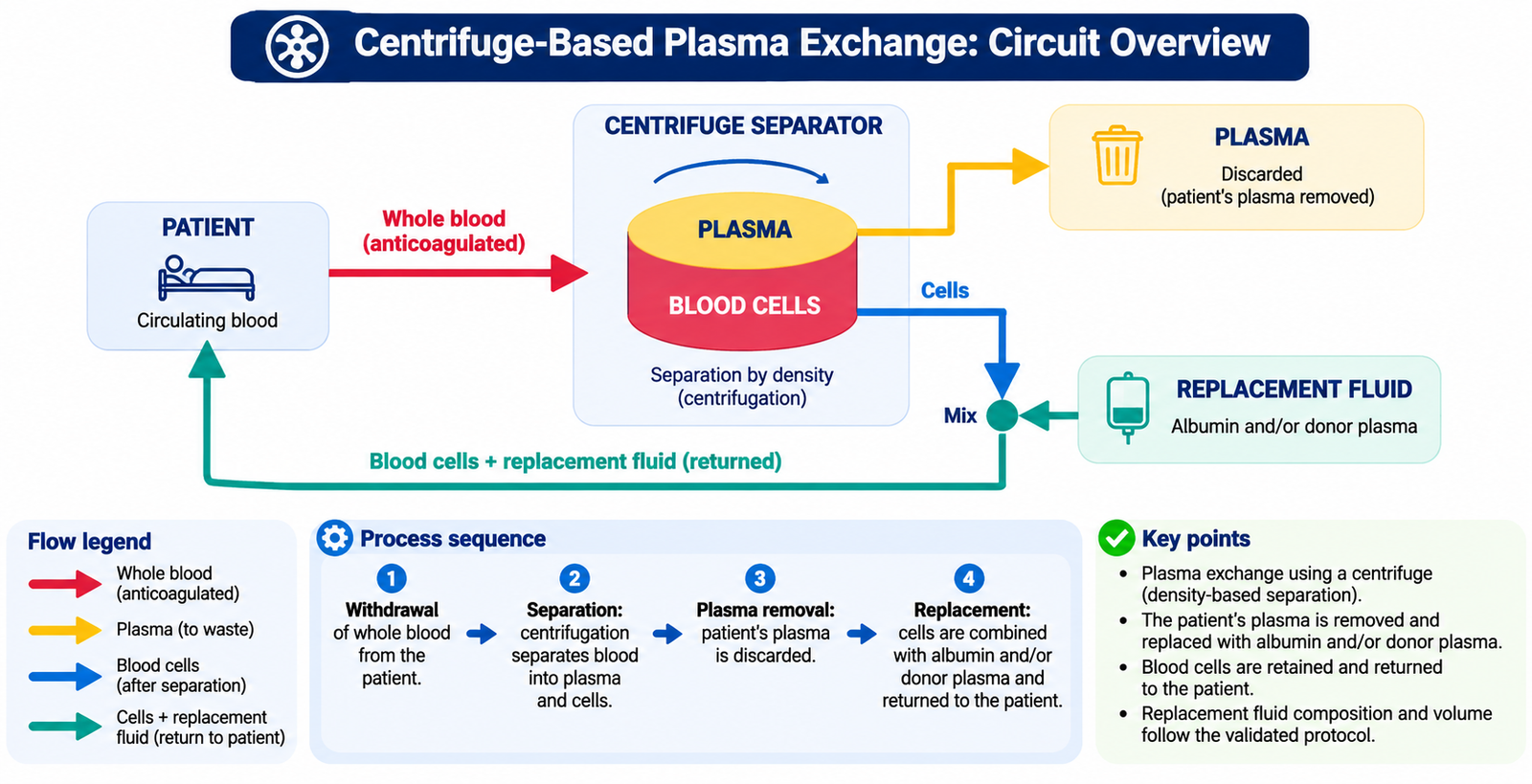
Centrifugal TPE (cTPE) separates plasma and cellular blood components through their differences in density in a spinning chamber or channel. The plasma layer is directed to waste and returned blood cells receive replacement fluid. ACD-A/citrate anticoagulation is frequently used in centrifugal apheresis, requiring awareness of calcium shifts. [1][6][7]
Typical characteristics
- Uses dedicated apheresis hardware and disposables; certain centrifugal platforms can operate using peripheral or central access depending on flow needs.
- Separation is driven by density rather than passage through a membrane plasma filter.
- Citrate-related symptoms and ionized-calcium monitoring are important safety considerations.
- Equipment-specific anticoagulant ratios, inlet flow, replacement protocols and alarms must follow current instructions for use. [6][7]
Membrane-filtration therapeutic plasma exchange
Membrane TPE (mTPE) uses a specially designed, high-permeability plasma separator. Blood flows along a membrane that retains cells while allowing the plasma phase, including plasma proteins, to cross to a separate outlet. Removed plasma is replaced during the procedure. It is not the same as conventional small-solute hemodialysis. [5][1]

Typical characteristics
- Uses a membrane plasma separator, compatible blood circuit and a platform capable of controlling plasma removal and replacement.
- Plasma extraction is constrained by the membrane, blood flow, transmembrane pressure, hematocrit, and access performance.
- Heparin is common in many membrane-based protocols; citrate or other approaches require specifically validated device protocols.
- Pressure, filter function, hemolysis indicators and fluid balance are particularly relevant. [5][6]
Centrifugation vs membrane filtration: practical comparison
| Comparison point | Centrifugal TPE (cTPE) | Membrane TPE (mTPE) |
|---|---|---|
| Separation principle | Density differences in a spinning chamber/channel. | Plasma passage through a dedicated membrane; cells retained. |
| Typical clinical environment | Apheresis / transfusion-medicine services. | Nephrology, ICU and extracorporeal treatment services. |
| Common anticoagulant approach | Often citrate-based, with calcium-related monitoring. | Often UFH; citrate only when the circuit and platform are validated. |
| Key technical constraints | Interface stability, venous access, inlet flow and centrifuge controls. | Transmembrane pressure, filtration fraction, viscosity, filter performance. |
| Core therapeutic mechanism | Removal of patient plasma, return of blood cells, replacement of removed plasma volume. | |
| Relative superiority | No modality is categorically best for every patient or indication. Selection depends on availability, expertise, access, tolerance, equipment, and protocol. | |
Source synthesis from recent reviews and ASFA; actual limits depend on the specific platform and patient. [5][6][1]

The first clinical indications and today’s established uses
The central historical indication was hyperviscosity due to myeloma or macroglobulinemia. Today, TPE is important in selected hematological, neurological, immunological, renal and transplant conditions, but treatment decisions depend on disease activity, indications and the 2026 ASFA category/grade rather than a generic list. [4][1]
| Clinical example | Why TPE may help | Important limitation |
|---|---|---|
| Symptomatic hyperviscosity | Rapidly reduces circulating immunoglobulins/paraproteins contributing to plasma viscosity. | Does not treat underlying clone; definitive disease therapy still needed. |
| Immune thrombotic thrombocytopenic purpura (iTTP) | Removes anti-ADAMTS13 autoantibodies and provides replacement plasma factors including ADAMTS13. | Urgent multidisciplinary care and associated disease-specific therapy are critical. |
| Guillain–Barré syndrome | Selected patients benefit from reduction of circulating immune factors. | Clinical timing, severity and comparative treatment options matter. |
| Myasthenic crisis / selected myasthenia gravis contexts | Removes pathogenic autoantibodies for a potentially faster short-term effect. | Effect is temporary; not a substitute for disease-specific treatment. |
| Anti-GBM disease and selected antibody-mediated disorders | Reduces pathogenic antibodies and circulating mediators. | Indication and disease phase are decisive; not all patients require TPE. |
| Selected transplantation and critical-care indications | Can help lower relevant antibodies or provide a specific plasma replacement strategy. | Evidence and ASFA categories vary substantially across conditions. |
Consult the 2026 ASFA fact sheet for each exact clinical indication and local specialty guidelines. The presence of a condition on this table is not a universal recommendation to perform TPE. [1]
Therapeutic TPE versus donor plasma collection
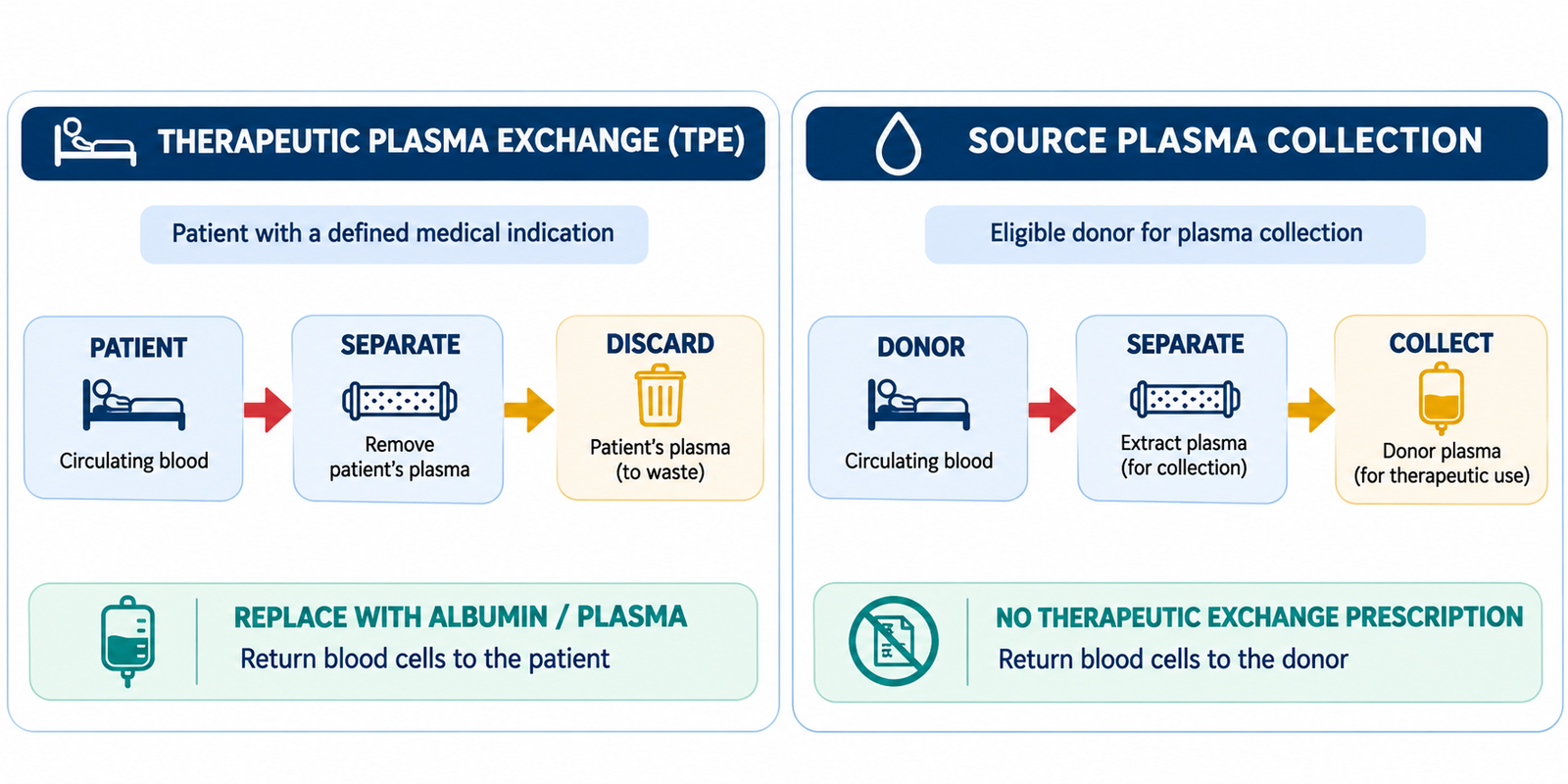
Plasma separation can be performed for two very different purposes: to treat a patient (TPE) or to collect plasma from an eligible donor for the blood/plasma supply. The hardware may share principles, but the clinical context, final product, substitution fluid, regulations and endpoints are different. [10][11][9]
| Feature | Therapeutic plasma exchange (TPE) | Source plasma collection |
|---|---|---|
| Subject | Patient receiving treatment for a disease. | Eligible blood/plasma donor. |
| Purpose | Remove pathogenic plasma constituents and/or replace factors. | Collect plasma for fractionation or authorized plasma products. |
| Removed plasma | Typically discarded; some jurisdictions have specific rules governing therapeutic-exchange plasma. | Stored/processed as a collected blood component or Source Plasma under applicable rules. |
| Replacement fluid | Albumin, donor plasma, and selected compatible alternatives are prescribed. | Routine therapeutic volume-for-volume albumin/plasma replacement is not the objective. |
| Endpoint | Clinical goal, exchange dose and disease response. | Donation/collection target, donor eligibility and safety limits. |
| Statistics | Number of clinical procedures/patients, indication, outcomes. | Donations, collection sessions, liters supplied/fractionated. |
How many plasma exchanges are performed worldwide?
No validated single global annual count of therapeutic plasma exchange sessions is currently available from the international registry and public-health sources consulted. Existing data are samples, registries, national claims, or donation volumes; they cannot be scaled into an accurate global TPE total without coverage and methodology assumptions. Commercial market estimates are not equivalent to peer-reviewed procedure censuses. [7][8][9]
| Source | Published figure | Population / period | What it can tell us |
|---|---|---|---|
| WAA Registry 2023 update | 58,355 procedures; centrifugal PEX 35% | 27 participating centers, 2018–2022, in a multicountry registry | Procedure composition within a participating cohort, not worldwide annual TPE. |
| US claims analysis (2021) | 70,247 apheresis claims/procedures; plasmapheresis 42.5% | US private-insurance sample, 2013–2015 | Claims-based historical US utilization, with acknowledged code limitations. |
| ASFA survey (1991) | 48,221 therapeutic and 330,702 donor apheresis procedures | Voluntary survey of 266 mostly US centers | Historical distinction between therapeutic and donor activity, not a global census. |
| WHO report released 2026 | 21.5 million liters of plasma for fractionation | Plasma from 36 reporting countries | Plasma manufacturing supply volume, not plasma-exchange treatment count. |
What happens during a treatment?
- Indication and plan. Clinical team confirms the disease-specific rationale, urgency, replacement fluid and goals. [1]
- Patient and circuit preparation. Access, blood count, coagulation tests, relevant electrolytes and compatibility of device and disposables are checked.
- Anticoagulated extracorporeal circulation. Blood is directed through a validated centrifugal or membrane circuit, with monitoring of inlet conditions, pressures and patient tolerance. [5][6]
- Separation and plasma withdrawal. The patient's plasma is collected separately while cells are retained for return.
- Fluid replacement. Albumin and/or plasma is infused in a controlled manner to replace the volume withdrawn; the choice varies by indication. [1][13]
- Reassessment and follow-up. Observe for adverse effects, document processed and exchanged volumes, and determine the need for repeat sessions or disease-specific therapy.
Replacement solutions, vascular access and anticoagulation
Replacement solutions
Human albumin is often used where factor replacement is not the main objective. Donor plasma may be appropriate when replacement of missing plasma factors is required, such as in TTP, or when coagulation status and clinical circumstances dictate. Choices influence allergic reactions, coagulation protein loss and hemodynamic tolerance. Use a clinical indication-specific protocol. [1][6]
Vascular access and anticoagulation
Peripheral access can suffice for some systems and patients; others require central venous access. Citrate anticoagulation is common with centrifugation and may cause hypocalcemia; heparin is common with membrane systems but has bleeding and HIT-related considerations. No inlet ratio, citrate infusion, or heparin dose should be copied between different systems. [5][7][6]
Complications and key patient-safety principles
| Risk | What to observe | Prevention or action |
|---|---|---|
| Citrate-related hypocalcemia | Tingling, cramps, nausea, ECG changes, low ionized calcium | Appropriate citrate/calcium protocol and clinical/biochemical monitoring. |
| Hypotension / volume shift | Blood pressure decline, dizziness, tachycardia | Control replacement balance and evaluate symptoms promptly. |
| Allergic / anaphylactic reactions | Rash, wheeze, dyspnea, hypotension, particularly with donor plasma | Monitor during infusion and follow emergency response procedures. |
| Bleeding and plasma-protein depletion | Coagulation tests, fibrinogen when appropriate, procedure-related bleeding | Match replacement product and schedule to clinical risk. |
| Vascular access and circuit issues | Access-site complications, occlusion, abnormal pressures, hemolysis signs | Validated sterile access, equipment monitoring, device-specific escalation. |
The WAA registry reported adverse events in 2.7% of procedures in its analyzed cohort; such figures depend on registry participation, definitions, techniques and case mix and should not be presented as a universal TPE complication rate. [7]
Frequently asked questions
Is TPE the same as plasma donation?
No. One treats a patient by removing and replacing plasma; the other collects plasma from a donor for the blood/plasma supply. [10][11]
Does TPE replace the patient's red blood cells?
No. The goal is to return most cellular components while removing plasma. Red-cell exchange is a different apheresis modality. [1]
Is membrane TPE the same as dialysis?
No. The hardware can appear similar but TPE uses a membrane that allows the plasma protein-containing phase through, not only small solutes. TPE also requires replacement of the removed plasma volume. [5]
Does one TPE session cure an autoimmune disease?
Often not. TPE may rapidly reduce circulating antibodies, but continued antibody production and redistribution can require repeated sessions and disease-specific treatment. [1][6]
Does TPE always exchange exactly 1–1.5 plasma volumes?
No. That is a common conventional planning range; high-volume and other special protocols exist for certain indications. Prescribe only according to disease- and device-specific guidance. [1][13]
Scientific, historical and regulatory references
Every numbered citation inside the text links to its full bibliographic entry below. Source links open the journal, public-health agency or manufacturer page.
- Zantek ND, Alquist CR, et al. (2026). Guidelines on the Use of Therapeutic Apheresis in Clinical Practice: The Tenth Special Issue. Journal of Clinical Apheresis 41(S2), e70141. Open reference ↗
- Abel JJ, Rowntree LG, Turner BB. (1914). Plasma Removal With Return of Corpuscles (Plasmaphaeresis). Journal of Pharmacology and Experimental Therapeutics 5:625–641. Open reference ↗
- Russian pioneers of therapeutic hemapheresis and extracorporeal hemocorrection: 100-year anniversary of the world’s first successful plasmapheresis. (2014). Open reference ↗
- History of therapeutic apheresis. Transfusion and Apheresis Science (2025). Historical review of early clinical use and automation. Open reference ↗
- Therapeutic Plasma Exchange Using Membrane Plasma Separation. Clinical Journal of the American Society of Nephrology (2020). Open reference ↗
- Therapeutic Plasma Exchange: Current and Emerging Applications to Mitigate Cellular Signaling in Disease. (2025). Open reference ↗
- The World Apheresis Association registry, 2023 update. Transfusion and Apheresis Science 62, 103831 (2023). Open reference ↗
- Apheresis practice patterns in the United States of America: Analysis of a market claims database (2021). Open reference ↗
- World Health Organization. Blood safety and availability fact sheet, 12 June 2026; and Global status report on blood safety and availability 2025. Open reference ↗
- U.S. FDA. Source Plasma and Therapeutic Exchange Plasma: establishment registration/product definitions. Open reference ↗
- U.S. FDA. Compliance guidance for therapeutic exchange plasma, distinguishing therapeutic procedures from donor Source Plasma. Open reference ↗
- American Society for Apheresis. Summary of results of 1991 ASFA apheresis survey. Open reference ↗
- Terumo BCT. A Guide to Assist Clinicians Ordering Therapeutic Plasma Exchange Procedures (manufacturer educational guide; device instructions take precedence). Open reference ↗